RMT to RMT coffee chat. There is no competition

Grab a coffee. Let’s talk about something we all feel in this industry but rarely say out loud: the imaginary wall of "competition."
We all go to school, we all study the exact same anatomy, But the moment we step into the real world, a strange shift happens. Suddenly, instead of being a community, we are treated like rivals.
I want to share a couple of observations about our Canadian RMT community. For me, it’s not judgement—it’s just a clear observation of reality, and if you don;t agree is ok, and if you do, it's ok too. Either way isn't right or wrong; we just have different experiences because we do have different backgrounds and cultures. And it’s the exact reason I choose to work alone.
The "Ice-Cold" Room (Leave the Ego at the Intake Desk)
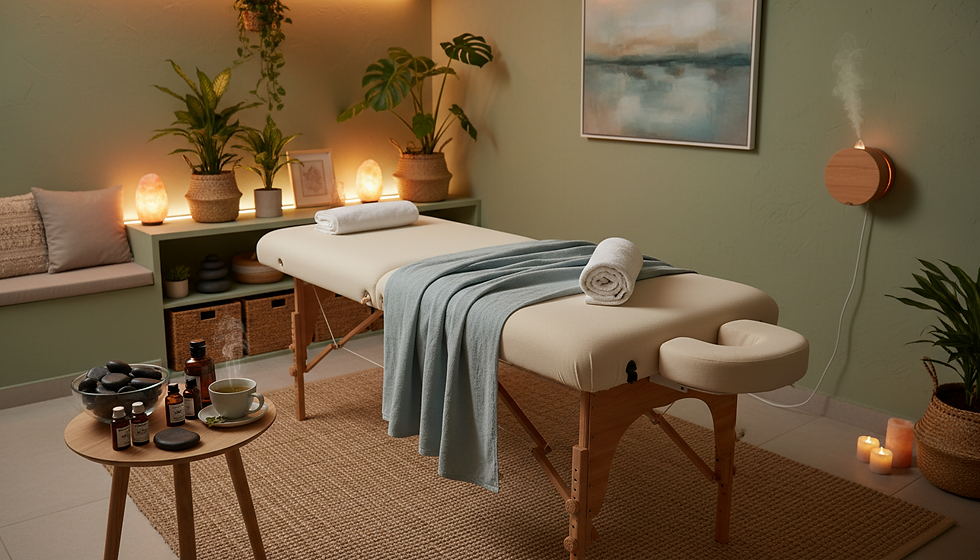
We’ve all been there. You need bodywork. Your muscles hurt, your mind is tired, and you just want to let go for an hour. So, you book a treatment. When you fill out the intake form and it asks for your occupation, you’re honest: Registered Massage Therapist.
And then, the shift happens.
The male therapists usually don’t care; they treat you like any other body. But walking into a room with some female therapists?
The energy instantly turns ice-cold. A heavy silence fills the room.

And if you ask a question during the treatment? Sometimes, you get that laugh.
You know the one. That defensive body language that subtly implies: "How can you be an RMT and not know this?"
Let me clear something up: Dear, I am not asking out of ignorance.
I am asking because I am a client on your table, showing you that I am paying attention. I am actively respecting your advice, your perspective, and your unique way of looking at a body.
There are no hidden agendas or trick questions. I am stepping back to let you lead.
Today, I am a client. Not an RMT.
I am paying for my hour. I am coming to you because my body needs work, not because I am there to judge you, audit you, or critique your technique. Let’s drop the hostility. A professional treats every body with the time, attention, and care they deserve—regardless of what the client does for a living.

My Practice is Not a Free Buffet (The Chef’s Recipe)
The other side of this weird "competition" mindset is the complete lack of professional boundaries.
Sometimes, people who barely know me will approach me and straight-up demand to know my exact protocols. They see me implementing a new tool into my practice and want the step-by-step breakdown. And when I gently tell them that how we use the same tool can differ, they get offended.
Here is the missing piece: Two therapists can buy the exact same piece of equipment, but they will use it in completely different ways.
Why? Because true mastery doesn't come from a user manual.
It comes from years of learning to think outside the box, refusing to just rely on basic instructions, and treating the unique body in front of you.
Building a successful protocol requires real clinical devotion:
Testing & Tweaking: Endless hours figuring out how a tool adapts to different dysfunctions.
Deep Awareness: Constantly tracking exactly how the body reacts to every adjustment.
Following Up: It’s never just about "charging for a treatment." It’s about investing in the long-term patient outcome.
Let’s talk about the investment. If you’ve been in this field for years, you know this industry isn’t cheap. When I bring a new tool into my practice, it represents months and months of heavy research, endless reading, financial investment, and trial after trial to figure out how to apply it differently for various dysfunctions.
Asking me to just hand over the exact protocols I spent my time and money developing is disrespectful.
It’s like walking into a high-end restaurant and demanding the chef give you their signature, successful recipe for free just because you ask.
Collaboration requires a baseline of mutual respect and boundaries.

This Isn't a Fantasy—I've Lived It
Wanting a real community isn't just wishful thinking. I know it’s possible because I’ve seen it work. Before practicing in Canada, I spent years working within therapy communities in Europe and the Middle East. It has been over 20 years, and guess what? We still keep in touch.
My former teachers and classmates from those days are still my go-to network. If someone needs clinical advice, a second opinion, or a helping hand with a tough case, we answer. Distance and time haven’t changed that.
Why I Choose to Work Alone
Here is the truth: There is no competition.
None of us are clones. Even if we graduated from the exact same class, our touch is different. Our approach is different. Our energy is different. The client who connects with my style might not connect with yours, and vice versa.
Because I’ve observed these walls, the heavy silences, and the boundary issues here, I made a conscious choice to practice independently. I don’t let it drain me; I just choose to stand on my own two feet.

But imagine if we put our massive egos aside?
Imagine a Canadian RMT community where we see each other as a continuity of helping hands. If we collaborate and respect each other’s unique way of working, it creates a massive win-win for us as business owners and for the clients who just want to heal.
The market is big enough for all of us. Let’s lose the ice-cold rooms, respect the work we each put into our crafts, and start acting like a real, connected community.


Comments